Best Amex Card for Beginners in 2026: Simple Starter Picks

Kevin Mitchell
Saturday, July 11, 2026 at 2:08 PM EDT
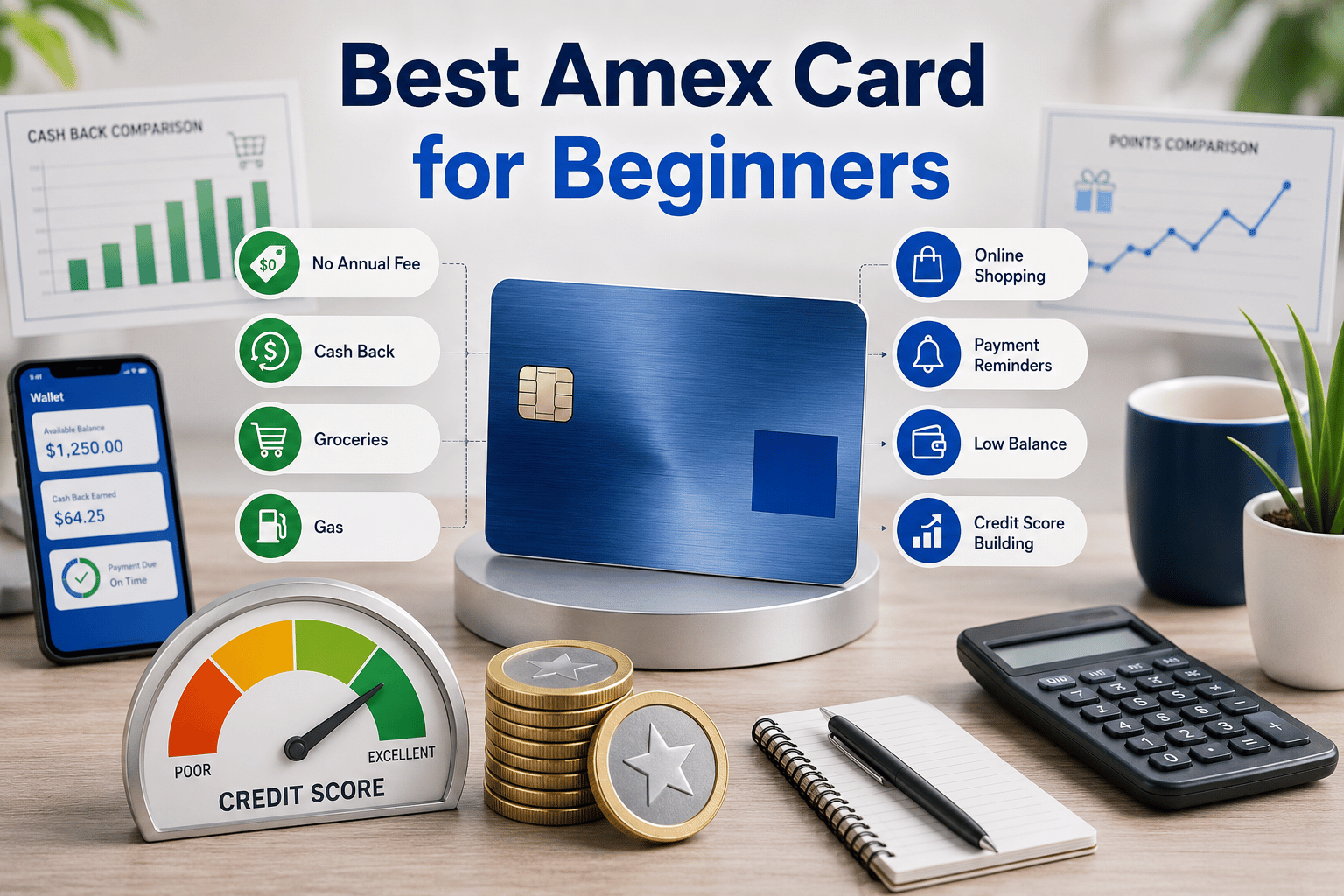
The selection of the best Amex card for the beginner is difficult due to the wide range of cards offered by the brand. There are different types of Amex credit cards that can offer Membership Rewards, cash back with or without an annual fee. Best Amex Card for beginners in 2026.
For the beginner, the best Amex card will not be the most expensive one with complicated rules. In this case, the best choice will be the easiest to understand and use for everyday transactions.
For the beginner card, the important criteria to take into account while choosing Amex cards are commitment level, useful reward categories, and reasonable fee structure. For a beginner, the first card should be the simplest one – cash back card rather than premium cards or the one with complicated points program.
Most often, the Blue Cash Everyday Card from American Express will be one of the best Amex cards for beginners due to its lack of annual fee and rewarding the common spending categories such as U.S. supermarkets, U.S. gas stations, and U.S. online retail purchases. Also, other beginner friendly Amex cards could be such as Cash Magnet Card for beginners with flat cash back, Amex EveryDay Credit Card for beginners points
This guide explains the best Amex card for beginners. How to compare beginner friendly cards, what rewards matter most, approval difficulty, and common mistakes to avoid.
Quick Answer: Best Amex Card for Beginners
The best Amex card for beginners depends on what type of rewards you want.
For most beginners, the best overall choice is:
- Blue Cash Everyday Card from American Express
It is beginner friendly because it has no annual fee and rewards common everyday purchases.
For simple flat cash back, beginners may also consider:
- American Express Cash Magnet Card
For beginners who want points instead of cash back, a possible option is:
- Amex EveryDay Credit Card
For higher household spending, especially groceries, streaming, gas, and transit, a beginner with strong spending habits may compare:
- Blue Cash Preferred Card from American Express
However, beginners should be careful with annual fee cards. A card with an annual fee only makes sense if the rewards and benefits are worth more than the cost.

Best Amex Cards for Beginners Compared
| Card | Best For | Reward Style | Beginner Benefit |
|---|---|---|---|
| Blue Cash Everyday Card | Everyday spending with no annual fee | Cash back | Simple rewards on groceries, gas, and online retail |
| Cash Magnet Card | Simple flat cash back | Cash back | Easy unlimited cash back structure |
| Amex EveryDay Credit Card | Beginner points users | Membership Rewards points | Good for learning Amex points without starting premium |
| Blue Cash Preferred Card | Higher grocery and household spending | Cash back | Strong rewards, but annual fee must be considered |
| Delta SkyMiles Blue American Express Card | Beginner airline miles users | Delta miles | No annual fee airline card for Delta users |
What Makes an Amex Card Beginner Friendly?
An Amex card suitable for beginners is supposed to be easy to use, useful, and cheap. An excellent beginner’s Amex card must not complicate the rewards system nor persuade the individual to spend more than he intended to.
A good beginner Amex card usually has:
• No annual fee or a low annual fee
• Easy rewards structure
• Useful everyday categories
• Simple redemption options
• Clear card benefits
• Good mobile app tools
• No need for advanced travel knowledge
• Rewards that match normal spending
Premium cards have great advantages, but they tend to come at a high cost.
A perfect beginner’s card is supposed to help one develop positive habits.
Best Overall Amex Card for Beginners: Blue Cash Everyday
American Express’ Blue Cash Everyday Card is one of the best choices available for beginners as it provides some useful rewards without an annual fee.
This card is especially good for people who spend money on:
• Groceries
• Gas
• Online shopping
• Everyday purchases
The card gives out cash rewards in the form of Reward Dollars which can be redeemed through statement credits. This helps make the rewards more understandable than points or miles.
For a beginner, that matters. Cash back is simple. You do not need to learn transfer partners, point values, travel portals, or airline programs.
Why Blue Cash Everyday Works for Beginners
This is the best card for beginners because it provides rewards for everyday spending. Almost everyone spends their money on regular items like groceries, gasoline, and shopping sites every month.
It may be a good fit if:
• You want no annual fee
• You want simple cash back
• You shop at U.S. supermarkets
• You buy gas
• You shop online
• You are new to rewards cards
• You want a card that is easy to keep long term
The no annual fee structure makes it easier to hold the card for years. This can be helpful because keeping older accounts open may support credit history over time.
Blue Cash Everyday Example
Let’s say a beginner spends each month:
• $300 at U.S. supermarkets
• $150 at U.S. gas stations
• $250 on U.S. online retail purchases
• $400 on other purchases
Estimated monthly rewards:
• $300 at 3% = $9
• $150 at 3% = $4.50
• $250 at 3% = $7.50
• $400 at 1% = $4
Total estimated monthly cash back:
$25
Estimated yearly cash back:
$25 x 12 = $300
For a no annual fee card, this can be useful value. The best part is that the rewards come from normal spending, not complicated bonus chasing.
Best Amex Card for Simple Flat Cash Back: Cash Magnet
The American Express Cash Magnet Card can be useful for beginners who do not want to track categories. It offers unlimited 1.5% cash back on purchases, which makes it simple.
A flat cash back card may be easier for users who spend across many different categories and do not want to think about which card to use.
Cash Magnet may be a good fit if:
• You want simple rewards
• You do not want category tracking
• You want cash back on most purchases
• You want an easy everyday card
• You prefer simple over maximum rewards
The main downside is that category cards may earn more in specific areas. For example, a card with 3% on groceries, gas, and online shopping can beat 1.5% if those are your main spending categories.
Still, for beginners who want simplicity, Cash Magnet can be easy to understand.
Best Beginner Amex Card for Points: Amex EveryDay
The Amex EveryDay Credit Card may be a beginner option for people who want to learn Membership Rewards points without starting with a premium card.
Membership Rewards points can be flexible, but they are more complicated than cash back. Points may be used in different ways, and the value can depend on how they are redeemed.
Amex EveryDay may be a good fit if:
• You want to learn Amex points
• You shop at U.S. supermarkets
• You want a points card without starting premium
• You may use points for travel later
• You are comfortable learning redemption options
For most beginners, cash back is easier. But if your long term goal is travel rewards, a beginner points card can help you learn how the system works.
Best Amex Card for Higher Grocery Spending: Blue Cash Preferred
American Express’s Blue Cash Preferred Card could prove useful to those who frequently pay for food shopping, preferred streaming services, gasoline, and travel expenses.
The Blue Cash Preferred Card has better returns compared to the Blue Cash Everyday in certain categories, although it requires one to pay the annual fee after the initial year. In that regard, novices must determine whether it is worth it.
Blue Cash Preferred may be a good fit if:
• You spend heavily at U.S. supermarkets
• You use select U.S. streaming subscriptions
• You spend on gas and transit
• You want high cash back
• You can earn enough rewards to beat the annual fee
• You pay your balance in full every month
It may not be best for beginners who spend lightly or do not want to manage annual fee value.
Blue Cash Everyday vs Blue Cash Preferred for Beginners
| Feature | Blue Cash Everyday | Blue Cash Preferred |
|---|---|---|
| Best For | Beginners and moderate spenders | Higher grocery and household spenders |
| Annual Fee | No annual fee | $0 intro annual fee, then $95 |
| Grocery Rewards | 3% at U.S. supermarkets up to yearly cap, then 1% | 6% at U.S. supermarkets up to yearly cap, then 1% |
| Gas Rewards | 3% at U.S. gas stations up to yearly cap, then 1% | 3% at U.S. gas stations |
| Online Retail | 3% on U.S. online retail purchases up to yearly cap, then 1% | Not the main strength |
| Streaming | Not the main strength | 6% on select U.S. streaming subscriptions |
| Beginner Friendly | Very beginner friendly | Good only if spending justifies the fee |
For most beginners, Blue Cash Everyday is the safer starting point. Blue Cash Preferred can be better if your spending is high enough to make the annual fee worthwhile.
Cash Back vs Points for Beginners
Beginners often ask whether they should choose cash back or points.
Cash back is usually better for beginners because it is easier to understand.
Cash back is good if:
• You want simple rewards
• You want statement credit value
• You do not travel often
• You do not want to compare point values
• You want a low maintenance card
Points can be good if:
• You want travel rewards later
• You are willing to learn redemptions
• You understand that point value can vary
• You do not mind more planning
• You want flexibility
The simple rule is this: start with cash back if you want easy value. Start with points only if you are ready to learn how points work.
Approval Difficulty for Beginner Amex Cards
Getting approved will depend on your credit report. American Express may look into such things as credit scores, income, payments history, debts, credit utilization, and new applications.
“Beginner Friendly” does not necessarily mean easy approval. Some individuals with little credit history may have problems getting approved.
Before applying, check:
• Your credit score
• Your payment history
• Your current balances
• Your income information
• Your recent credit applications
• Your credit utilization
If you are brand new to credit, you may need to start with a student card, secured card, or another starter product before applying for some Amex cards. A small business loan can provide the boost you need—without dipping into your savings.
If you already have fair to good credit and stable income, you may have better approval chances, but approval is never guaranteed.
What Credit Habits Should Beginners Build?
The card you choose matters, but your habits matter more.
Good beginner habits include:
• Pay on time every month
• Pay the full statement balance when possible
• Keep credit utilization low
• Do not spend more for rewards
• Avoid cash advances
• Read card terms before applying
• Track your due date
• Review your statements
• Start with one card before adding more
A beginner should focus on building credit and avoiding interest. Rewards should come second.
Should Beginners Get a Premium Amex Card?
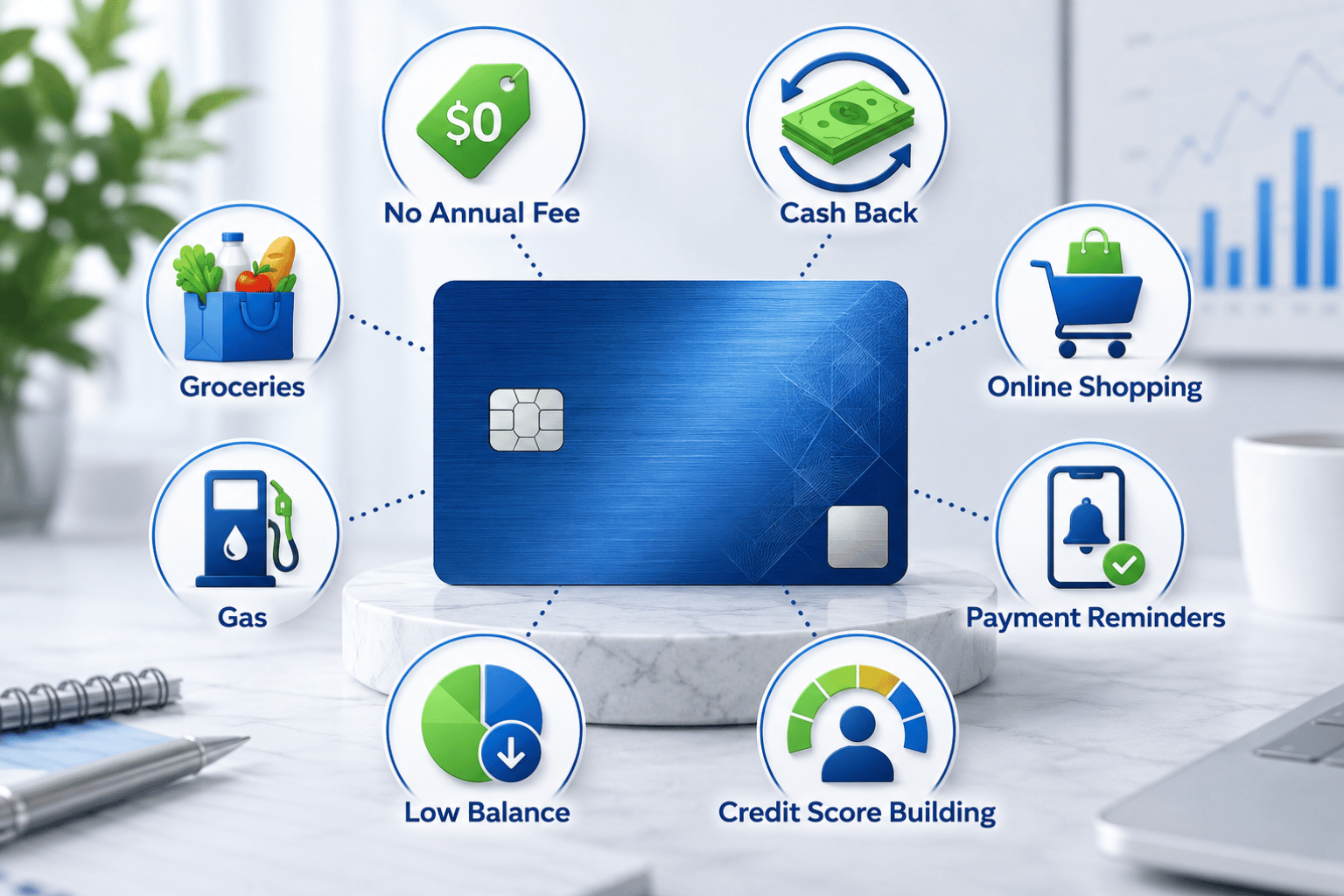
The majority of people who are new to credit cards should avoid getting themselves into the hassle of a premium Amex card unless they are fully aware of the annual fees and other rewards that come along with the card. They may require more planning to use properly.
A premium card may not be right if:
• You rarely travel
• You do not use the credits
• You want simple rewards
• You do not want a high annual fee
• You are still learning credit card basics
• You may carry a balance
For most beginners, a no annual fee cash back card is a better starting point.
Best Amex Card for Students or New Credit Users
If you are a student or very new to credit, approval may be harder for some Amex cards. In that case, the best card may not always be an Amex card at first.
A student or new credit user should look for:
• No annual fee
• Simple rewards
• Easy account management
• Clear terms
• Low spending pressure
• Ability to build payment history
After building credit history, it may become easier to qualify for stronger Amex cards later.
Beginner Mistakes to Avoid
Avoid these mistakes when choosing your first Amex card:
- Choosing a card only because of the brand name
- Applying for a premium card too early
- Ignoring the annual fee
- Ignoring APR
- Carrying a balance for rewards
- Spending more to earn cash back
- Not checking category limits
- Forgetting that not all stores qualify for bonus rewards
- Applying for too many cards quickly
- Missing payments
The best beginner card should make your finances easier, not more stressful.
How to Choose the Best Amex Card for Beginners
Use this checklist before applying:
• Do I want cash back or points?
• Do I want no annual fee?
• Where do I spend the most?
• Can I pay in full every month?
• Do I understand the rewards categories?
• Will the card be useful long term?
• Can I manage the due date?
• Is the annual fee worth it?
• Do I understand the APR?
• Am I applying only because of a bonus?
Do not start with a complicated card just because it looks more premium. Start with the card that fits your actual spending and helps you manage credit responsibly.
FAQ About the Best Amex Card for Beginners
What is the best Amex card for beginners?
The Blue Cash Everyday Card is often one of the best Amex cards for beginners because it has no annual fee and offers simple cash back on common everyday categories.
Is Blue Cash Everyday good for beginners?
Yes, Blue Cash Everyday can be good for beginners because it has no annual fee and rewards groceries, gas, and online retail purchases.
Is Blue Cash Preferred good for beginners?
Blue Cash Preferred can be good for beginners with high grocery and household spending, but the annual fee after the first year should be considered.
Should beginners choose cash back or points?
Most beginners should choose cash back because it is easier to understand. Points can be useful later if the user wants travel rewards.
Is Amex hard to get for beginners?
It depends on your credit profile. Some beginners may qualify, while people with very limited credit history may need to build credit first.
What should beginners look for in an Amex card?
Beginners should look for no annual fee, simple rewards, useful categories, easy redemption, and manageable payment terms.
Should beginners get an Amex Gold or Platinum card?
Most beginners should avoid premium cards unless they understand the annual fee, credits, rewards, and travel benefits.
Can an Amex card help build credit?
Yes, an Amex card can help build credit if you pay on time, keep balances low, and use the card responsibly.
How many Amex cards should a beginner have?
Most beginners should start with one card. After building good habits, they can consider adding another card if it has a clear purpose.
What is the biggest beginner credit card mistake?
The biggest mistake is carrying a balance and paying interest just to earn rewards. Rewards are only valuable when you avoid interest.
Trending Insights
Discover the smartest credit card solutions designed to simplify payments and reward your lifestyle