How to Choose the Right Credit Card for Your Spending Habits

Kevin Mitchell
Thursday, July 2, 2026 at 11:21 AM EDT

Choosing the right credit card starts with understanding how you spend money. People want to find the credit card overall but it is really simple. There is no one credit card for everyone. The best credit card for you depends on how you spend your money how you pay your bills what you want to get from your credit card your credit history and how you live your life. The best way to choose the right credit card is to match the card with your lifestyle, budget, and payment habits.
A credit card that is great for travel may not be good for someone who mostly buys groceries. A cashback credit card may be better for someone who’s new to credit cards than a complicated travel rewards credit card. A premium credit card, with a yearly fee may look nice but it may not be worth it if you do not use the things it offers. Choose the right credit card. That is why you should not pick a credit card just because it is popular. You should pick it because it matches where your money already goes.
This guide explains how to pick the credit card for your spending habits, including cashback credit cards, travel credit cards, grocery credit cards, gas credit cards, low APR credit cards, business credit cards, yearly fees, rewards and common mistakes to avoid when choosing a credit card.
Why Your Spending Habits Matter
Your spending habits matter because credit cards reward different types of purchases. Others are useful for balance transfers or low interest.
When you choose a card that does not match the way you spend money you will not get a lot of value from it.
For example if you do not travel often a card that gives you rewards for traveling is not a good choice for you. If you buy a lot of groceries a card that gives you rewards for buying groceries will probably give you value. If you shop on the internet a lot, a card that gives you cash for shopping on the internet may be more useful for you.
The right card for you is one that fits the way you really live. It should give you rewards, for the things you already buy not try to get you to spend money.
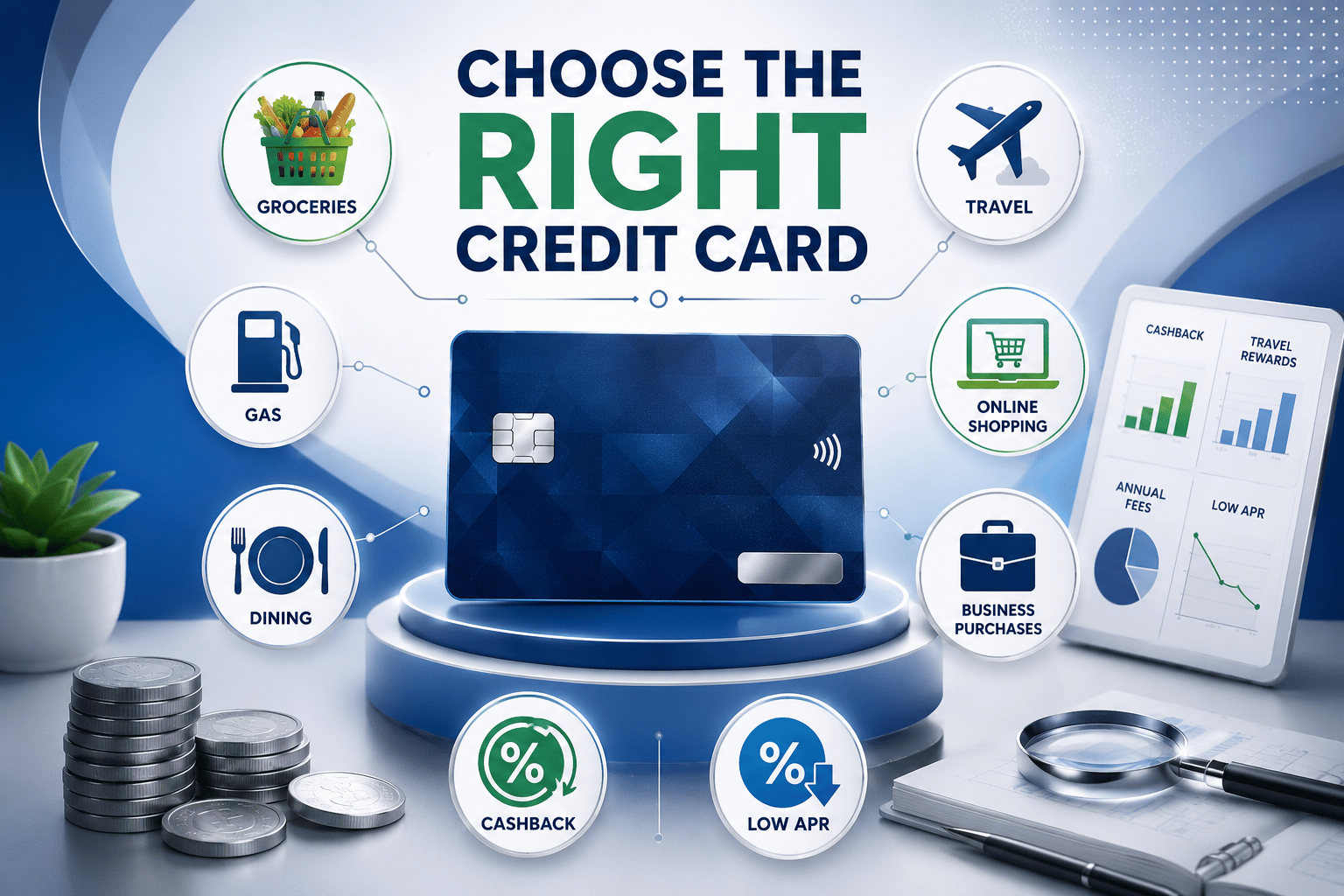
Step 1: Know Where You Spend the Most
Before applying for a credit card, look at your monthly spending. You do not need a complicated system. Just review your bank statement or card statement and write down your biggest spending categories. To Choose the right credit card start by looking at where you spend the most each month.
Common spending categories include:
• Groceries
• Gas
• Dining
• Online shopping
• Travel
• Rent or bills
• Subscriptions
• Drugstores
• Business purchases
• Everyday purchases
Once you know where your money goes, you can match the card to those categories.
For example, if groceries are your biggest monthly expense, look for a card with strong grocery rewards. If gas is a major cost, a gas rewards card may help. If your spending is spread across many categories, a flat rate cashback card may be better. You should choose the right credit card based on your real spending, not just the biggest welcome bonus.
Best Credit Card Type by Spending Habit
| Spending Habit | Best Card Type | Why It Works |
|---|---|---|
| Groceries | Grocery rewards card | Gives higher rewards at supermarkets |
| Gas | Gas rewards card | Helps drivers earn more on fuel |
| Online shopping | Online shopping cashback card | Rewards ecommerce purchases |
| Dining | Dining rewards card | Good for restaurants and food delivery |
| Travel | Travel rewards card | Useful for flights, hotels, and travel perks |
| Everyday spending | Flat rate cashback card | Simple rewards on most purchases |
| Carrying a balance | Low APR card | Interest savings matter more than rewards |
| Business purchases | Business credit card | Helps separate and track business expenses |
This table is a good starting point. The best card still depends on the exact rewards rate, annual fee, APR, and card terms.
Step 2: Decide Between Cashback, Points, or Travel Rewards
Credit cards usually reward you in three main ways:
• Cashback
• Points
• Miles or travel rewards
Cashback is really easy to figure out. If a card gives you 2% cashback you can tell away how much money you will get back. Cashback cards are perfect for people who’re new to this and for people who want rewards that are not complicated. If you spend more on groceries and gas, choose the right credit card that rewards those categories.
Points are a bit different they can be used in ways but you have to put in some effort to get the most out of them. You can use points for things like travel, gift cards or credits on your statement or for shopping online. The thing is, the value of points can change depending on what you use them for. Top credit cards 2026.
Travel rewards are great for people who fly a lot stay in hotels or like to use travel perks. These cards can give you things like airline miles, hotel points, access to airport lounges, credits for travel or protection for your trips.. For people who do not travel that much these cards might not be the best choice. Travel rewards cards are best, for people who really use travel rewards like people who fly all the time or stay in hotels a lot.
Choose cashback if:
• You want simple rewards
• You do not travel often
• You want easy value
• You do not want to manage points
• You prefer statement credits or cash rewards
Choose points or miles if:
• You travel often
• You understand reward redemptions
• You want flights or hotel stays
• You can use travel benefits
• You are comfortable comparing point value
For most beginners, cashback is the safest starting point.
Step 3: Compare Annual Fees
Some credit cards have no annual fee. Others charge a yearly fee. A card with an annual fee is not always bad, but it must give you enough value to justify the cost. If you travel often, choose the right credit card with travel rewards, no foreign transaction fees, and useful travel benefits.
Use this simple rule:
Rewards plus useful benefits should be higher than the annual fee.
For example, if a card has a $95 annual fee and you earn $300 in rewards, the card may be worth it. But if you only earn $60 in rewards, the card is probably not a good deal. Find a Loan visit this.
Annual fee cards may be worth it if:
• You use the card often
• The rewards rate is strong
• You use the card benefits
• You travel enough to use travel perks
• The credits are useful for your lifestyle
No annual fee cards may be better if:
• You are a beginner
• You want low commitment
• You do not spend heavily in bonus categories
• You do not want to track credits
• You want simple cashback
A premium card can look impressive, but it is only valuable if you actually use the benefits.
Step 4: Check APR Before Rewards
APR stands for annual percentage rate. It is the interest rate you may pay if you carry a balance.
This is very important. If you pay your full statement balance every month, APR may not affect you much. But if you carry a balance, APR can become more important than rewards.
A card may offer 2% cashback, but if you carry a balance and pay high interest, the rewards can disappear quickly. Interest costs can be much higher than cashback rewards.
If you often carry a balance, do not focus on rewards first. Look for a low APR card, a balance transfer card, or a card with a 0% intro APR offer.
Rewards are best for people who pay in full every month.
Best Card Type for Grocery Spending
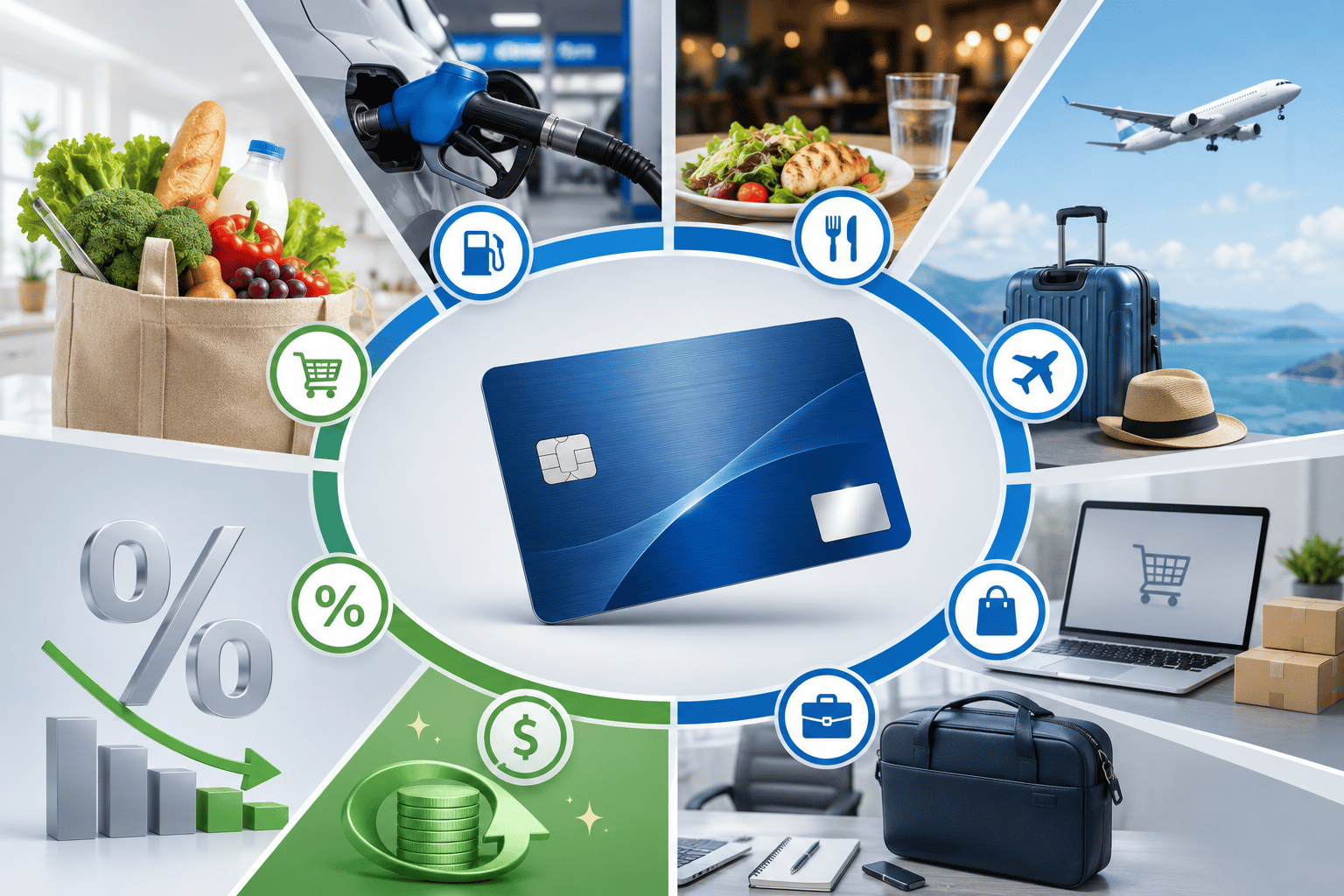
If groceries are one of your biggest expenses, look for a card that rewards supermarket purchases. A grocery rewards card can help families and regular home cooks earn more from normal spending.
This card type is best for:
• Families
• Home cooks
• Weekly grocery shoppers
• People with high supermarket spending
Check if the card has a yearly cap. Some grocery cards give high rewards only up to a certain spending limit.
Best Card Type for Gas Spending
If you drive often, a gas rewards card can help. Some cards give higher rewards at gas stations, while others include gas as part of everyday spending categories.
This card type is best for:
• Drivers
• Commuters
• Delivery workers
• Road trip travelers
Make sure the card rewards the gas stations you actually use.
Best Card Type for Online Shopping
If you shop online often, choose a card that rewards online retail purchases or gives strong flat rate cashback.
This card type is best for:
• Ecommerce shoppers
• People who buy clothes online
• People who buy electronics online
• Holiday shoppers
• People who use online marketplaces
Check the terms because not every online purchase qualifies as online shopping. Some cards may exclude travel, food delivery, bill payments, or subscriptions.
Best Card Type for Dining
If you eat out often or use food delivery, a dining rewards card may be a good choice. Some cards give higher rewards on restaurants, takeout, and delivery services.
This card type is best for:
• Restaurant users
• Food delivery users
• People who dine out often
• People who spend more on meals than groceries
Dining rewards can be useful, but they should not encourage overspending.
Best Card Type for Travel
If you travel often, a travel rewards card can help you earn points or miles. Some travel cards also include trip protection, airport lounge access, hotel credits, or rental car coverage.
This card type is best for:
• Frequent flyers
• Hotel guests
• Business travelers
• People who book travel online
• People who can use travel perks
Travel cards are less useful if you rarely travel. In that case, cashback may be better.
Best Card Type for Everyday Spending
If your spending is spread across many categories, a flat rate cashback card may be the easiest choice. These cards give the same reward rate on most purchases.
This card type is best for:
• Beginners
• Simple budget users
• People with mixed spending
• People who do not want to track categories
A flat rate card may not always give the highest rewards, but it is easy to use.
Best Card Type for Business Purchases
Business credit cards can help small business owners, freelancers, and side hustle workers separate personal and business spending.
This card type is best for:
• Freelancers
• Small business owners
• Online sellers
• Contractors
• Consultants
• Side hustle users
Business cards may also offer rewards on advertising, shipping, office supplies, internet, phone bills, travel, or general business purchases.
How Many Credit Cards Should You Have?
There is no perfect number. Some people only need one credit card. Others may use two or three cards for different categories.
A simple setup could be:
• One flat rate cashback card for everyday spending
• One category card for groceries, gas, or dining
• One travel card if you travel often
Beginners should keep it simple. Too many cards can make it harder to manage due dates, balances, and rewards.
Only add another card if it solves a clear problem or adds real value.
Credit Score and Approval
Your credit score can affect which cards you qualify for. Premium rewards cards often require stronger credit. Beginner cards may be easier to get approved for.
Card issuers may look at:
• Credit score
• Payment history
• Income
• Existing debt
• Credit utilization
• Recent applications
• Length of credit history
Before applying, check your credit profile. If your score is low or your balances are high, it may be better to improve your credit before applying for a new card.
Common Mistakes to Avoid
Many people choose the wrong credit card because they focus only on rewards or card popularity.
Avoid these mistakes:
• Choosing a card only because it is popular
• Ignoring the annual fee
• Ignoring APR
• Carrying a balance on a rewards card
• Overspending to earn points
• Applying for too many cards quickly
• Not checking if your purchases qualify
• Forgetting category caps
• Choosing travel rewards when you do not travel
• Keeping a card you no longer use
The best card is not always the card with the biggest bonus. It is the card that fits your spending and payment habits.
FAQ About Choosing the Right Credit Card
How do I choose the right credit card?
Start by reviewing your spending habits. Then compare rewards, annual fees, APR, welcome bonuses, and benefits. Choose a card that rewards your normal purchases.
What is the best credit card for beginners?
A no annual fee cashback card is often best for beginners because it is simple and low commitment.
Should I choose cashback or travel rewards?
Choose cashback if you want simple value. Choose travel rewards if you travel often and can use points or miles well.
Is an annual fee credit card worth it?
An annual fee card is worth it only if the rewards and benefits you actually use are worth more than the fee.
What credit card is best for groceries?
A grocery rewards card is best if supermarket spending is one of your biggest monthly expenses.
What credit card is best for everyday spending?
A flat rate cashback card is often best for everyday spending because it gives simple rewards across many purchases.
Should I get a rewards card if I carry a balance?
Usually no. If you carry a balance, a low APR card or balance transfer card may save more money than rewards.
How many credit cards should I have?
Many people do well with one or two cards. Add more only if you can manage them responsibly and they provide clear value.
What is the biggest mistake when choosing a credit card?
The biggest mistake is choosing a card for rewards while ignoring APR, annual fees, and your real spending habits.
Can the wrong credit card cost money?
Yes. The wrong card can cost money through annual fees, interest, late fees, and poor rewards value.
Trending Insights
Discover the smartest credit card solutions designed to simplify payments and reward your lifestyle