Credit Card Rewards in 2026: Are They Still Worth It?

Kevin Mitchell
Friday, June 19, 2026 at 11:53 AM EDT

Credit card rewards can still be worth its in 2026. But they aren’t right for everyone. It depends on how you use this card. It also depends on your to balance, fees, and spending habits. For years, rewards cards have been promoted as an easy win. You spend money. Then you get something back. That reward could be cash back. It could be travel points and hotel rewards, statement credits & lounge access or other perks.
But in 2026, rewards cards aren’t always simple. Some cards have higher annual fees. Some cards offer more benefits but require more effort to use. Some cards look great on paper. But in real life, they may not save you much money. That is why many people ask this question:
Are credit card rewards still worth it in 2026? The answer is yes, but only for the right person. A rewards card can be useful if its fit your normal spending. It can also help if you pay your fully balance on time. You should also avoid extra fees and understand how the rewards working.
But rewards are not always worth it. If this card makes you spend more, it can cost you money. If you carry a balance that, interest can wipe out the rewards. If you pay a high annual fee for perks you do not use, the card may not be a good deal. In this guide, we will explain how credit card rewards work in 2026. We will also cover when they are worth it, when they are not, and how to compare cards before you apply.
What Are Credit Card Rewards?
Credit card rewards are benefits you earn when you use a credit card for eligible purchases. These rewards usually come in the form of cash back, points, miles, statement credits, travel perks, or store rewards.

The most common types of credit card rewards are:
• Cash back
• Travel points
• Airline miles
• Hotel points
• Dining rewards
• Gas rewards
• Grocery rewards
• Rotating category rewards
• Statement credits
• Welcome bonuses
Cash back is usually the easiest reward to understand. For example, a card may offer 1.5% cash back on every purchase or 3% cash back on groceries. If you spend $1,000 in an eligible category and earn 3% back, you may earn $30 in rewards. To more loan offer visit this.
Points and miles could also become quite complex. There are credit cards that will allow you to spend points not only on travels but on gift cards, on merchandise, or on statement credits. Depending on how you choose to spend your points, their value will vary. For example, one point might have more value when spent on travel and lower value when spent on cash back or gift cards.
That is why credit card rewards in 2026 demand special attention. Although you might be offered many points, what really counts is the redemption rate and other factors.
Why Credit Card Rewards Are Popular in 2026
Credit card rewards remain popular since people look for ways to get value out of their regular spending. Buying groceries, paying for fuel, going out to eat and subscribe services, traveling, and even bills fall into the category of common expenses each month. Rewards cards allow turning them into money-back value.
This will be helpful for those who use their card responsibly. If one spends $500 on food shopping per month and gets 3% cash back on the purchases, this is an easy way to get rewards without changing the budgeting habits. Those who have to travel frequently can earn enough points and credits to save money on flights, hotel rooms, lounge passes, and even travel insurance using a travel reward card.
One more reason why reward cards remain so popular is the competition between card issuers in providing welcome bonuses. Welcome bonus can be really valuable in case it does not require the spending amount to be above the regular budget limit. The spending threshold can result in the bonus points, which can be valuable only if one does not overspend for reaching it.
In 2026, rewards cards are also marketed as subscription-style products with a set of extra benefits and credits. Some premium rewards cards provide credits that can be used for various purposes such as dining, traveling, rideshare services, media content, staying at hotels, and so on. Such credit rewards can be really valuable but can also lead to confusion.
Best Credit Card Advice: How to Choose, Use, and Save
The Main Types of Credit Card Rewards in 2026
Not all rewards cards work the same way. Before choosing a card, it helps to understand the main reward types.
Cash Back Rewards
A cash back card is one that rewards you with a percentage of your spending. There are some cards that reward you with the same rate of cash back on everything you purchase. Other cards have an increased rate of cash back in some specific category.
Types of cash back schemes include:
• Flat-rate cash back on all purchases
• Increased cash back on groceries
• Increased cash back on gas
• Increased cash back on dining out
• Increased cash back on online shopping
• Changing categories quarterly
• Self-chosen custom categories
One major advantage of a cash back card is the ease of use. You don’t need to figure out anything about transferring to airlines or hotel award charts. You can simply redeem the cash back as statement credits, direct deposits, and many more options.
Cash back cards are more suitable for beginners because they are easy to measure. If you get 2% of cash back, then $10,000 worth of eligible spending will give you about $200 in reward money.
Travel Rewards
Travel rewards cards offer points or miles that can be used for flights, hotels, rental cars, and travel portals. These cards can offer strong value for people who travel often.

Travel cards may include benefits such as:
• Airline miles
• Hotel points
• Travel statement credits
• Airport lounge access
• Free checked bags
• Priority boarding
• Travel insurance benefits
• Rental car coverage
• Global Entry or TSA PreCheck credits
Travel rewards can be quite beneficial, although they need more planning. The value of the points will depend on how they are used; travel points might be worth more when transferred to an airline partner, although the procedure is rather complex for beginners.
Travel rewards are ideal for travelers who like to plan their trips and want to choose between various ways of redeeming their points. Travel rewards credit cards are not ideal for non-travelers.
Premium Credit Card Rewards
Premium rewards cards tend to have relatively high annual fees and a lot of different benefits. Among these may include access to lounges, various credits for flights, hotels, dinners, entertainment, and other luxury-type features.
However, premium credit cards are becoming increasingly popular in 2026 due to the fact that certain annual fees are extremely high. The cards promise thousands of dollars in various bonuses and benefits; however, card users should be aware of the fact that they will have to use many different credits to receive full benefits from their premium credit card.
This is the point at which most consumers tend to make a mistake. A premium card may be beneficial because it offers a lot of different benefits; however, a premium card can be considered useful only when the benefits correspond to the needs of a consumer.
For example, if a premium card has a high annual fee but provides its cardholders with credits for services that they already pay for, it may be beneficial; otherwise, a premium card may lead consumers to unnecessary expenses.
Store Rewards Cards
These types of credit cards provide perks to people who buy from their respective retailers. This type of card can prove beneficial when you are a frequent shopper from that particular store; however, it does have some drawbacks.
Store credit cards provide:
• Store points
• Store discounts
• Special financing
• Unique sales
• Maximum rewards at the retailer
On the negative side, the reward can be restricted to only one store. In addition, some of the store cards have high APR rates, and if you do not pay off your balance each month, this will cost you money.
Are Credit Card Rewards in 2026 Actually Free?
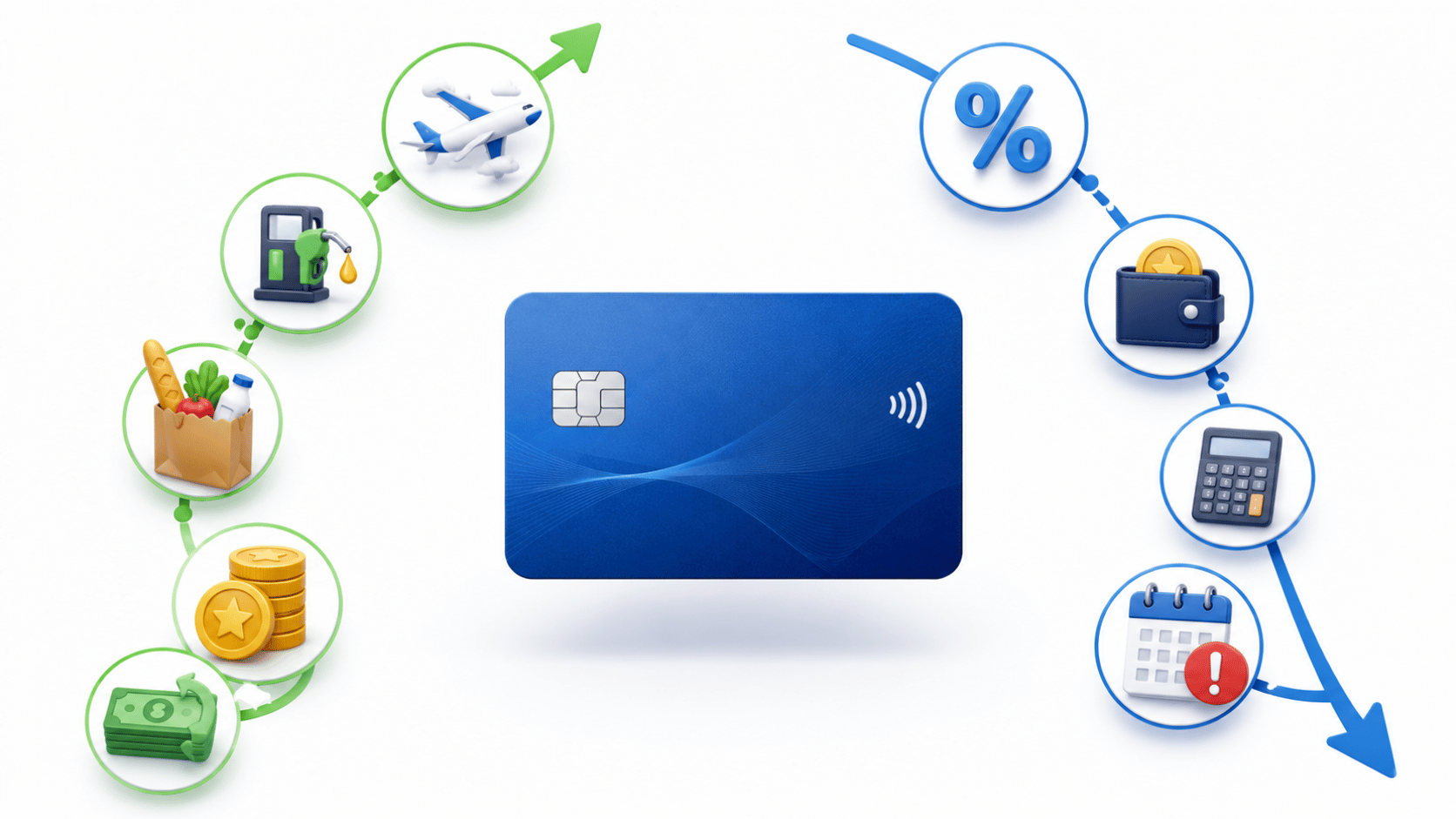
While credit card rewards sound like free money, they are not actually free. There are various ways through which reward programs get financed, such as merchant fees, interest payments, annual fees, late fees, among others related to credit card usage.
Each time you buy something using a credit card, the merchant bears a processing fee. These fees are charged in the whole card payment scheme. Some merchants may incorporate those fees into their prices, and therefore, rewards are not created out of thin air.
Moreover, card issuers receive profits from customers carrying a balance in their accounts and making interest payments. This is extremely important as the interest paid by customers easily exceeds the amount of rewards received. Earning 2% cash back does not matter if you are earning a huge amount of interest for the APR of your account. The rewards may make you earn a little profit, while the interests will cost you more.
Hence, there is an important rule about credit card rewards: the rewards can be profitable only if you do not pay any interest. When you are a regular customer who carries a balance in his/her account, low-interest cards will be more profitable.
When Credit Card Rewards Are Worth It
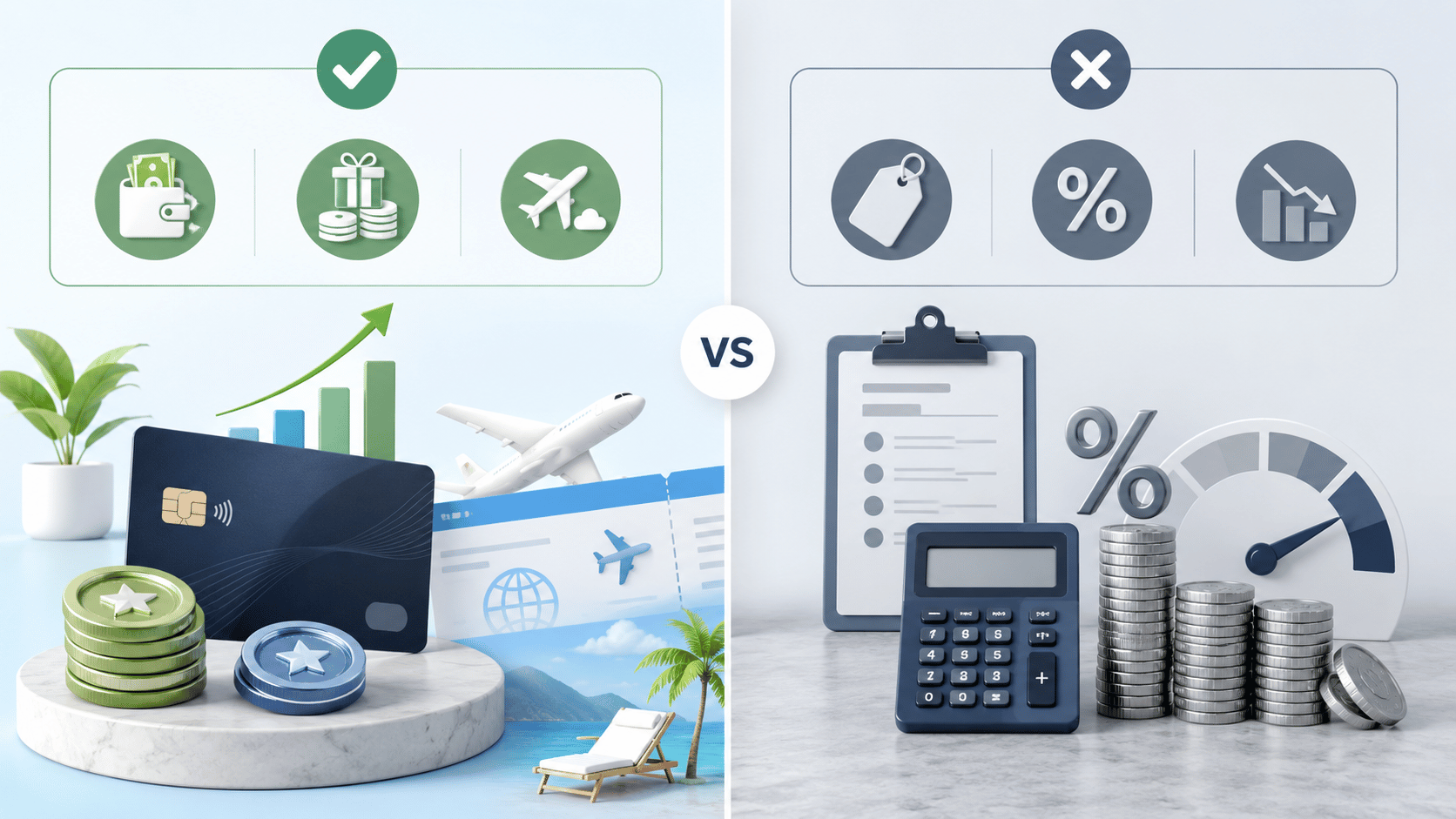
In 2026, credit card rewards can be worth it if the card complements the consumer’s current financial behavior. The card should allow one to get a benefit from the transactions that he or she would make regardless of the card.
The rewards can be worth it if:
• You pay the bill in full each month
• You do not have late payments or fees
• You do not spend more just to earn some points
• The rewards of the card complement your spending
• The annual fee is less than the actual value of the benefits received
• You know how to redeem the points
• You take advantage of the card rewards without altering your life style
• You account properly for rewards, fees, and credits
No annual fee cash back card, for instance, can be considered worthwhile because of the lack of any expenses for its maintenance annually. If the card provides some cash backs on groceries, gas or daily transactions, then the consumer will earn easily without having to cover any annual fee.
Similarly, the travel reward card can prove worthy if you travel quite often and take advantage of its services. If the card
When Credit Card Rewards Are Not Worth It
Credit card rewards are not worth it when they cost more than they give back. Many people focus on points, miles, and perks but ignore the bigger picture.
Rewards may not be worth it if:
• You carry a balance and pay interest
• You pay a high annual fee for benefits you do not use
• You overspend to earn rewards
• You open too many cards too quickly
• You chase welcome bonuses without a plan
• You forget to use credits before they expire
• You redeem points at poor value
• The card does not match your actual spending
One of the biggest problems is overspending. A person may buy more than planned because they want to earn rewards. But spending $100 extra to earn a few dollars in rewards is not a win.
Another common problem is annual fee pressure. If a card costs hundreds of dollars per year, you need to calculate whether the real benefits are worth more than the fee. A card may advertise $1,000 or more in benefits, but if you only use $250 of them and the annual fee is $500, you may be losing money.
Rewards should support your budget. They should not control your budget.
How Annual Fees Change the Value of Rewards
Annual fees are one of the most important parts of credit card rewards in 2026. Many rewards cards have no annual fee, while premium cards may charge much more.
A no-annual-fee card is easier to justify because any rewards you earn can be positive value, as long as you avoid interest and fees. A card with a $95 annual fee can still be worth it if you earn enough rewards or use valuable benefits. But a premium card with a much higher annual fee needs more careful review.
Here is a simple way to think about it:
Annual rewards value minus annual fee equals real card value.
For example, if a card gives you $450 in rewards and benefits but charges a $95 annual fee, your estimated value may be $355. But if another card gives you $600 in benefits and charges a $695 annual fee, your estimated value may be negative unless you use more benefits.
You should also be honest about benefit value. A $100 hotel credit is not worth $100 to you if you would not normally book that hotel. A dining credit is not worth full value if it makes you eat somewhere you would not usually go.
Real value means money saved on things you already planned to buy.
The Best Type of Rewards Card for Different Users
Different people need different cards. There is no single best rewards card for everyone.
Best for Grocery Spending
A grocery rewards card may be useful if groceries are one of your biggest monthly expenses.
Look for:
• High rewards at supermarkets
• Reasonable spending caps
• Low or no annual fee
• Easy cash back redemption
Best for Gas and Commuting
The gas rewards card will prove useful in case you are a frequent driver.
Criteria:
• Maximum cash back at gas stations
• Rewards earned while traveling/transiting
• No complicated restrictions
• Reasonable fee structure
Good for Traveling
The travel card will prove worthwhile in case you travel a few times a year.
Criteria:
• Travel points which can be used flexibly
• Travel credits which you can earn
• Efficient reward redemption system
• Travel insurance benefits
• Partner airlines/hotels
Best for Premium Benefits
A premium card can work for people who already use premium travel or lifestyle benefits.
Look for:
• Credits you already use
• Lounge access you will actually use
• Strong travel protections
• Rewards that beat the annual fee
• Clear redemption value
Do not choose a premium card just because it looks impressive. Choose it only if the math works.
Common Mistakes People Make With Credit Card Rewards
Many cardholders lose value because they make simple mistakes.
Mistake 1: Carrying a Balance
This is the biggest mistake. Interest charges can destroy the value of rewards. If you carry a balance, focus on paying it down before chasing points.
Mistake 2: Ignoring the Annual Fee
A high annual fee can be worth it, but only if you use enough benefits. Always subtract the fee from the total value.
Mistake 3: Overvaluing Credits
A credit is only valuable if it replaces money you would have spent anyway. If you buy something only because the card offers a credit, you may not be saving money.
Mistake 4: Redeeming Points Poorly
Some redemption options give lower value. Always compare cash back, travel portal, gift card, and transfer options before redeeming.
How Credit Card Rewards Could Change in 2026
Credit card rewards may continue changing in 2026 because of competition, regulation, issuer costs, and consumer behavior. Premium cards may add more credits and benefits, but annual fees may also remain high. Some issuers may focus more on targeted perks, subscription-style benefits, and travel partnerships.
There is also continued discussion around swipe fees and credit card competition. If card payment rules change, issuers and networks may adjust rewards programs. It is not always clear how quickly these changes would affect consumers, but rewards programs are closely connected to the economics of card payments.
FAQ About Credit Card Rewards in 2026
Yes, if you pay off your balance on time and use a card that reflects your purchasing habits, then credit card rewards in 2026 can be worth it. Credit card rewards are not worth it if you do not pay your balance on time or go into debt to collect more rewards.
Which type of credit card rewards should I prefer?
Cash-back reward programs are good to choose for those who have not worked with credit card rewards yet. Travel rewards will work best for people who understand how to take advantage of the reward points.
Is it worth it to get a premium credit card that has an annual fee?
Premium credit cards are worth it only if you make use of all credits, travel perks, and lounges. Otherwise, you will spend more money than you earn from these rewards.
Do credit card rewards affect my credit score?
No, rewards will not affect your score. But having several credit cards and paying them late or even missing payments can affect your credit score.
Is cash back more beneficial than points?
For beginner users, cash back is the best option because of its simplicity and easier redemption. On the other
Trending Insights
Discover the smartest credit card solutions designed to simplify payments and reward your lifestyle